
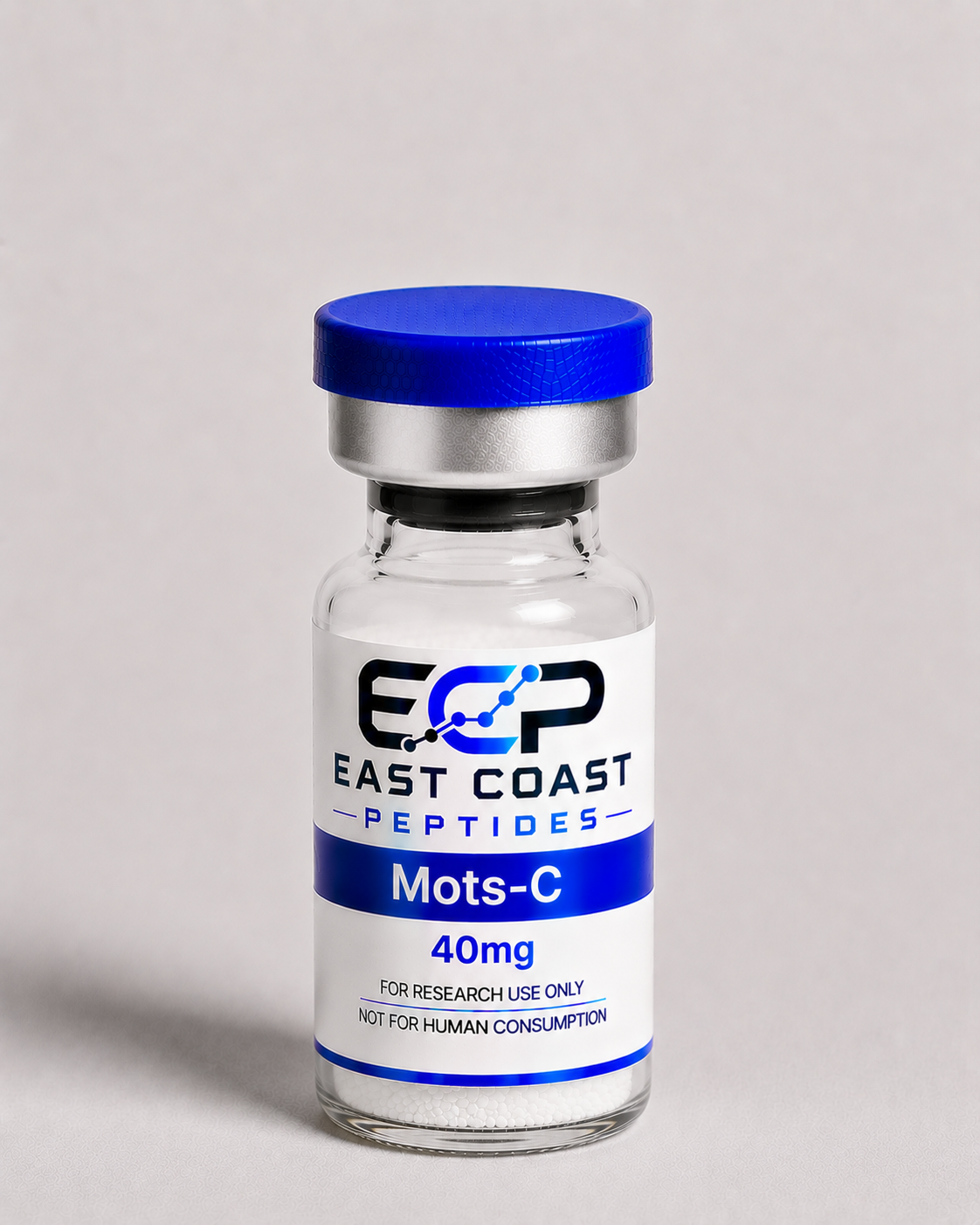
MOTS-c Research: Mitochondrial Signaling and AMPK
Explore MOTS-c research on mitochondrial signaling, AMPK, cell and animal models, and the limits of current evidence.
In this article8 sections
Length of 16 amino acids
Molecular weight of approximately 2,174 daltons
Mitochondrial genomic origin
A guide to MOTS-c research covering mitochondrial signaling, AMPK, experimental models and the limits of current evidence.
MOTS-c, short for Mitochondrial Open Reading Frame of the 12S rRNA-c, is a 16-amino-acid mitochondrial-derived peptide associated with cellular energy sensing, insulin sensitivity, metabolic flexibility, exercise biology, and mitochondrial-to-nuclear communication.
Its discovery expanded the traditional understanding of the mitochondrial genome. Mitochondrial DNA was once thought to encode only the proteins, transfer RNAs, and ribosomal RNAs required for oxidative phosphorylation. The identification of MOTS-c and other mitochondrial-derived peptides suggested that mitochondria can also produce small signaling molecules capable of influencing cellular and systemic physiology.
Unlike most peptides, which are encoded by nuclear DNA, MOTS-c is encoded within the mitochondrial genome. This unusual origin has made it an important research tool for studying how mitochondria communicate metabolic stress, regulate nuclear gene expression, and coordinate whole-cell adaptation.
For research use only. Not intended for human or veterinary use. This article is provided for scientific and educational purposes and does not constitute medical, therapeutic, performance-enhancement, formulation, reconstitution, or dosing advice.
What Is MOTS-c?
MOTS-c is a short peptide encoded within the 12S ribosomal RNA region of mitochondrial DNA.
Its amino-acid sequence is:
MRWQEMGYIFYPRKLR
Key characteristics include:
- Length of 16 amino acids
- Molecular weight of approximately 2,174 daltons
- Mitochondrial genomic origin
- Association with AMPK signaling
- Detectability in human circulation
- Stress-responsive nuclear translocation
- Links to metabolic and exercise-related pathways
MOTS-c is considered part of a broader family of mitochondrial-derived peptides, or MDPs.
Mitochondrial-Derived Peptides
Mitochondrial-derived peptides are small signaling molecules encoded within regions of mitochondrial DNA traditionally classified as ribosomal RNA sequences.
Important examples include:
- Humanin
- MOTS-c
- Small humanin-like peptides 1 through 6
These peptides appear to participate in communication between mitochondria and the rest of the cell.
Potential functions include:
- Stress signaling
- Metabolic regulation
- Cellular survival
- Inflammatory modulation
- Mitochondrial quality control
- Nuclear gene regulation
- Aging-related adaptation
Their discovery helped establish mitochondria as signaling organelles rather than simply cellular energy generators.
Mitochondrial-Nuclear Communication
Mitochondria depend heavily on nuclear genes for their structure and function.
Although mitochondrial DNA encodes a small number of proteins, most mitochondrial proteins are encoded in the nucleus and imported into the organelle.
This creates a need for constant communication between the two genomes.
Communication from the nucleus to mitochondria is often called anterograde signaling.
Communication from mitochondria back to the nucleus is called retrograde signaling.
MOTS-c is studied as a possible mediator of retrograde signaling because it may move into the nucleus during cellular stress and influence stress-responsive gene expression.
Why Mitochondrial Signaling Matters
Mitochondria help regulate:
- ATP production
- Redox balance
- Reactive oxygen species
- Calcium signaling
- Apoptosis
- Fatty-acid oxidation
- Glucose metabolism
- Cellular stress responses
- Innate immune activation
When mitochondrial function changes, the rest of the cell must adapt.
Mitochondrial-derived peptides may help communicate these changes and initiate compensatory responses.
MOTS-c and Evolutionary Conservation
The MOTS-c sequence has been reported to show meaningful conservation across vertebrate species.
Evolutionary conservation may suggest biological importance because functionally important sequences are often maintained under selective pressure.
However, conservation alone does not establish a peptide’s complete physiological role.
Comparative studies are still needed to determine how MOTS-c biology differs among species, tissues, and metabolic states.
AMPK: The Central Energy Sensor
One of the most frequently studied mechanisms associated with MOTS-c is activation of AMP-activated protein kinase, or AMPK.
AMPK monitors cellular energy availability.
It becomes active when energy demand rises and the balance between AMP, ADP, and ATP indicates metabolic stress.
Once activated, AMPK shifts the cell toward energy conservation and energy production.
Effects of AMPK Activation
AMPK activation can promote:
- Glucose uptake
- Fatty-acid oxidation
- Mitochondrial biogenesis
- Autophagy
- Metabolic flexibility
- Stress resistance
It can also suppress energy-intensive anabolic processes such as:
- Fatty-acid synthesis
- Cholesterol synthesis
- Protein synthesis during severe energy stress
- Some mTOR-dependent pathways
This makes AMPK a central connection point between MOTS-c research, metabolism, exercise, and aging.
MOTS-c and Metabolic Reprogramming
MOTS-c is often described as a metabolic regulator because its effects appear to shift cells toward more efficient energy utilization.
Research has examined changes involving:
- Glucose transport
- Fat oxidation
- Insulin signaling
- Mitochondrial activity
- Amino-acid metabolism
- One-carbon metabolism
- Cellular stress responses
Rather than acting through one conventional cell-surface receptor, MOTS-c may influence several interconnected metabolic pathways.
Its complete molecular mechanism remains under investigation.
Glucose Uptake
Skeletal muscle is a major site of insulin-stimulated glucose disposal.
AMPK activation can increase glucose uptake partly by promoting movement of the GLUT4 transporter toward the cell membrane.
MOTS-c research has therefore examined whether the peptide influences:
- GLUT4 translocation
- Muscle glucose uptake
- Insulin responsiveness
- Blood-glucose regulation
- Metabolic flexibility
These effects are especially relevant to preclinical models of insulin resistance.
Fatty-Acid Oxidation
AMPK can promote fatty-acid oxidation by influencing enzymes involved in lipid metabolism.
One important target is acetyl-CoA carboxylase.
When AMPK inhibits acetyl-CoA carboxylase activity, malonyl-CoA concentrations can decrease, reducing inhibition of mitochondrial fatty-acid transport.
This may increase:
- Fatty-acid entry into mitochondria
- Beta-oxidation
- Lipid utilization
- Metabolic adaptation during energy demand
MOTS-c research often examines these pathways alongside glucose metabolism.
AMPK and mTOR Signaling
AMPK and mTOR frequently act as opposing metabolic regulators.
AMPK is generally activated during energy stress and promotes conservation.
mTOR is generally activated when nutrients and energy are abundant and promotes growth and protein synthesis.
MOTS-c-associated AMPK activity may therefore influence:
- mTORC1 signaling
- Protein synthesis
- Autophagy
- Cell growth
- Nutrient sensing
The balance between these pathways depends on tissue type, exposure duration, nutritional status, and experimental conditions.
Mitochondrial Biogenesis
AMPK can influence mitochondrial biogenesis through pathways involving PGC-1α.
PGC-1α is a transcriptional coactivator that helps coordinate expression of genes involved in:
- Mitochondrial replication
- Oxidative phosphorylation
- Fatty-acid oxidation
- Antioxidant defense
- Exercise adaptation
MOTS-c research examines whether AMPK and PGC-1α signaling contribute to improved mitochondrial capacity and metabolic performance.
One-Carbon Metabolism
A distinctive feature of MOTS-c research is its proposed connection to one-carbon metabolism.
One-carbon pathways include:
- Folate metabolism
- Methionine metabolism
- Purine synthesis
- Methyl-group transfer
- Amino-acid metabolism
These pathways are essential for DNA synthesis, methylation, cellular growth, and metabolic regulation.
MOTS-c has been proposed to alter intermediates within these pathways, contributing indirectly to AMPK activation.
AICAR Accumulation
AICAR is an intermediate in purine biosynthesis.
Inside cells, AICAR can be converted to a form that mimics an energy-stress signal and activates AMPK.
MOTS-c research has examined whether changes in folate and purine metabolism lead to AICAR accumulation.
This would provide an indirect mechanism through which MOTS-c could activate AMPK without binding directly to the kinase.
The precise enzymes and sequence of events involved remain active areas of investigation.
Folate-Cycle Considerations
Early mechanistic interpretations have connected MOTS-c with inhibition or alteration of folate-cycle activity.
Because one-carbon metabolism contains many interconnected enzymes, it is important not to reduce the mechanism to one unconfirmed target without direct experimental evidence.
Researchers may need to measure:
- Folate intermediates
- Methionine-cycle metabolites
- Homocysteine
- AICAR
- Purine synthesis
- Methylation markers
- AMPK activation
These measurements can help determine how MOTS-c affects one-carbon metabolism in a given model.
Insulin Resistance Research
Insulin resistance occurs when tissues respond less effectively to insulin.
It is associated with:
- Reduced glucose uptake
- Elevated blood glucose
- Compensatory insulin elevation
- Lipid accumulation
- Mitochondrial dysfunction
- Chronic inflammation
- Metabolic inflexibility
MOTS-c has been studied in preclinical models because of its reported effects on AMPK, skeletal-muscle glucose uptake, and lipid metabolism.
Diet-Induced Obesity Models
Early MOTS-c research examined animals exposed to high-fat diets.
Reported research outcomes included changes in:
- Glucose tolerance
- Insulin sensitivity
- Fat accumulation
- Skeletal-muscle metabolism
- Body-weight response
- Energy utilization
These models are useful for studying metabolic pathways but do not fully reproduce the complexity of human obesity or type 2 diabetes.
Skeletal Muscle as a Research Target
Skeletal muscle is particularly relevant to MOTS-c biology because it is responsible for a large portion of whole-body glucose disposal.
Muscle also plays major roles in:
- Exercise adaptation
- Fatty-acid oxidation
- Amino-acid metabolism
- Mitochondrial biogenesis
- Insulin sensitivity
- Energy expenditure
MOTS-c research frequently measures muscle-specific endpoints to determine whether its systemic effects originate partly from altered skeletal-muscle metabolism.
Metabolic Flexibility
Metabolic flexibility is the ability to switch between fuel sources according to energy availability and demand.
A metabolically flexible system can efficiently transition between:
- Glucose oxidation
- Fatty-acid oxidation
- Fed-state metabolism
- Fasting metabolism
- Rest
- Exercise
Insulin resistance and mitochondrial dysfunction can reduce this flexibility.
MOTS-c is studied for its potential role in restoring or improving fuel switching in metabolic models.
MOTS-c and Exercise
Exercise produces broad changes in metabolism, gene expression, mitochondrial function, and endocrine signaling.
MOTS-c has attracted attention because some studies have reported that circulating concentrations change during exercise.
Its AMPK-related signaling profile also overlaps with several adaptations associated with endurance activity.
Exercise-Responsive Pathways
Exercise can activate:
- AMPK
- PGC-1α
- Calcium-dependent signaling
- Sirtuins
- Mitochondrial biogenesis
- Fatty-acid oxidation
- Glucose transport
- Antioxidant systems
MOTS-c may influence some of these same pathways.
This overlap has led to its discussion as a possible exercise-mimetic research compound.
What Does “Exercise Mimetic” Mean?
An exercise mimetic is a compound that reproduces selected molecular or metabolic responses associated with physical activity.
It does not recreate the complete effects of exercise.
Exercise also produces:
- Mechanical loading
- Cardiovascular conditioning
- Bone remodeling
- Neuromuscular adaptation
- Respiratory adaptation
- Psychological effects
- Tissue-specific stress responses
MOTS-c should therefore be viewed as a tool for studying exercise-related signaling rather than as a replacement for physical activity.
Physical-Performance Research
Preclinical studies have examined whether MOTS-c affects:
- Running capacity
- Grip strength
- Coordination
- Fatigue resistance
- Voluntary activity
- Skeletal-muscle function
- Mitochondrial efficiency
Some experiments have reported improved performance in aged or metabolically impaired animals.
The extent to which these results reflect direct muscle effects, altered metabolism, reduced fatigue, or systemic signaling remains under investigation.
Exercise Capacity in Aging Models
Aging is often associated with:
- Reduced mitochondrial function
- Lower aerobic capacity
- Loss of muscle strength
- Impaired glucose handling
- Increased oxidative stress
- Reduced metabolic flexibility
MOTS-c has been studied in aged animals to determine whether mitochondrial signaling can improve physical function.
These studies are preclinical and should not be interpreted as evidence of established effects in humans.
MOTS-c and Aging
Mitochondrial dysfunction is a major area of aging research.
Age-related changes may include:
- Reduced electron transport chain activity
- Accumulating mitochondrial DNA damage
- Lower mitophagy
- Reduced mitochondrial biogenesis
- Greater oxidative stress
- Altered nutrient sensing
- Declining insulin sensitivity
MOTS-c has been investigated because it sits at the intersection of mitochondrial signaling, AMPK, metabolism, and stress adaptation.
Circulating MOTS-c and Age
Some studies have reported lower circulating MOTS-c concentrations with increasing age.
This observation has led to interest in MOTS-c as a possible biomarker of:
- Mitochondrial health
- Metabolic function
- Physical performance
- Biological aging
- Age-related decline
However, circulating measurements may vary according to assay methods, health status, physical activity, tissue release, and sample handling.
Biomarker Limitations
A useful biomarker should demonstrate:
- Reliable measurement
- Reproducibility
- Clear reference ranges
- Association with meaningful outcomes
- Independence from major confounders
- Predictive value
MOTS-c research has not yet established all of these requirements.
An association between MOTS-c concentration and aging does not prove that low MOTS-c causes age-related decline.
Longevity Research
MOTS-c has been studied in experimental models involving lifespan and healthspan.
Research questions include:
- Whether mitochondrial-derived peptide signaling changes with age
- Whether MOTS-c affects stress resistance
- Whether it improves metabolic health
- Whether it influences physical function
- Whether it changes longevity-associated gene expression
Observational findings in long-lived populations are hypothesis-generating but cannot establish causality.
Nuclear Translocation
One of the most distinctive proposed properties of MOTS-c is its ability to move into the nucleus during metabolic or oxidative stress.
This suggests that MOTS-c may act not only through metabolic enzymes but also through direct regulation of nuclear responses.
Nuclear translocation may allow the peptide to influence genes involved in:
- Antioxidant defense
- Stress resistance
- Metabolism
- Protein quality control
- Cell survival
- Inflammation
Antioxidant Response Elements
Antioxidant response elements are regulatory DNA sequences found near genes involved in cellular defense.
They are commonly associated with pathways that respond to:
- Oxidative stress
- Electrophilic stress
- Toxic exposures
- Mitochondrial dysfunction
MOTS-c has been studied for possible interactions with transcriptional systems controlling these genes.
This could provide a mechanism through which mitochondrial stress alters nuclear gene expression.
Transcriptional Co-Regulation
MOTS-c is sometimes described as a transcriptional co-regulator rather than a conventional transcription factor.
A transcription factor typically binds DNA through a specialized DNA-binding domain.
A co-regulator may influence transcription by interacting with:
- Transcription factors
- Chromatin proteins
- Nuclear enzymes
- Regulatory complexes
More research is needed to define exactly how MOTS-c associates with nuclear promoters and transcriptional machinery.
Oxidative-Stress Research
Oxidative stress occurs when reactive oxygen species exceed the capacity of antioxidant and repair systems.
Mitochondria are both sources and targets of reactive oxygen species.
MOTS-c research may examine:
- ROS production
- Antioxidant gene expression
- Mitochondrial membrane potential
- Oxidative damage
- Cell survival
- Stress-induced nuclear translocation
The effect may differ according to the degree and duration of oxidative stress.
Inflammatory Signaling
Metabolic dysfunction and mitochondrial stress can activate inflammatory pathways.
Damaged mitochondria may release signals that influence:
- NF-kappa B
- Inflammasomes
- Cytokine production
- Innate immune responses
- Macrophage activation
MOTS-c has been investigated in inflammatory and metabolic models, although its direct immunological mechanisms are less established than its AMPK-related effects.
Mitochondrial Genetics
Because MOTS-c is encoded by mitochondrial DNA, genetic variation within its coding region may alter peptide sequence or function.
Mitochondrial DNA differs from nuclear DNA in several ways:
- It is maternally inherited
- It exists in multiple copies per cell
- Different mitochondrial variants may coexist
- Mutation rates and repair mechanisms differ
- Tissue heteroplasmy can vary
These features create additional considerations for MOTS-c genetics.
MOTS-c Genetic Variants
Naturally occurring mitochondrial variants affecting the MOTS-c coding sequence have been investigated in relation to:
- Metabolic traits
- Longevity
- Population differences
- Exercise responses
- Disease susceptibility
Results may be influenced by mitochondrial haplogroup, ancestry, environment, and nuclear-genome interactions.
Genetic association alone does not establish a functional effect.
Research Applications
MOTS-c may be used in studies involving:
- AMPK signaling
- Insulin resistance
- Glucose uptake
- Skeletal-muscle metabolism
- Obesity models
- Metabolic syndrome
- Exercise adaptation
- Physical performance
- Aging
- Mitochondrial-derived peptide biology
- Nuclear translocation
- Retrograde signaling
- Oxidative stress
- Mitochondrial genetics
Its broad signaling profile makes careful experimental design especially important.
Experimental Design Considerations
MOTS-c studies should account for:
- Species
- Age
- Sex
- Diet
- Exercise status
- Tissue type
- Metabolic health
- Mitochondrial haplogroup
- Exposure duration
- Stress conditions
- Time of sample collection
- Assay specificity
The same treatment may produce different outcomes in healthy, aged, obese, or metabolically stressed models.
Measuring AMPK Signaling
Common endpoints include:
- AMPK phosphorylation
- ACC phosphorylation
- AMP-to-ATP ratio
- AICAR concentrations
- GLUT4 translocation
- Glucose uptake
- Fatty-acid oxidation
- mTOR activity
- PGC-1α expression
Functional measurements should ideally accompany signaling markers.
Increased phosphorylation alone does not prove a meaningful improvement in whole-cell metabolism.
Measuring Mitochondrial Function
Useful assays may include:
- Oxygen-consumption rate
- ATP production
- Mitochondrial membrane potential
- Electron transport chain activity
- Reactive oxygen species
- Mitochondrial DNA copy number
- Mitochondrial morphology
- Mitophagy
- Mitochondrial biogenesis
No single assay provides a complete picture of mitochondrial health.
Measuring Metabolic Effects
Metabolic studies may assess:
- Glucose tolerance
- Insulin sensitivity
- Fasting glucose
- Insulin concentrations
- Lipid accumulation
- Respiratory exchange ratio
- Energy expenditure
- Food intake
- Body composition
- Tissue-specific glucose uptake
Pairing systemic measurements with tissue-specific analysis improves interpretation.
Measuring Nuclear Activity
Research into nuclear translocation may use:
- Cellular fractionation
- Immunofluorescence
- Nuclear peptide detection
- Chromatin immunoprecipitation
- Promoter-binding assays
- Gene-expression profiling
- Antioxidant-response markers
Appropriate controls are needed to exclude contamination between mitochondrial, cytoplasmic, and nuclear fractions.
Product Quality Considerations
Research-grade MOTS-c should be supported by batch-specific analytical documentation.
Useful information may include:
- Amino-acid sequence
- Molecular formula
- Theoretical molecular weight
- HPLC purity
- Mass-spectrometry identity
- Net peptide content
- Counterion form
- Lot number
- Endotoxin testing
- Sterility testing where applicable
- Stability data
- Storage conditions
A high purity percentage does not independently confirm biological activity.
Peptide Stability
MOTS-c stability may be influenced by:
- Temperature
- Light
- Oxygen
- Moisture
- pH
- Repeated freeze-thaw cycles
- Surface adsorption
- Enzymatic degradation
- Microbial contamination
The stability of lyophilized material may differ substantially from that of a prepared solution.
Product-specific stability documentation should take priority over generalized handling assumptions.
Laboratory Handling
MOTS-c is commonly supplied as a lyophilized research peptide.
Laboratories should follow validated supplier and institutional procedures regarding:
- Solvent compatibility
- Reconstitution
- Storage
- Light protection
- Container selection
- Working-solution stability
- Freeze-thaw limitations
- Microbial control
- Disposal
General preparation instructions should not replace batch-specific documentation or an approved laboratory protocol.
Research Limitations
Important limitations include:
- Most findings remain preclinical
- The complete molecular mechanism is not established
- Specific folate-cycle targets remain under investigation
- AMPK activation may differ by tissue
- Exercise-mimetic effects reproduce only selected exercise pathways
- Circulating MOTS-c assays may vary
- Biomarker associations do not establish causality
- Nuclear translocation may depend on stress conditions
- Species differences may affect metabolism
- Mitochondrial genetic variation may influence results
- Product purity does not guarantee biological potency
- Animal findings do not automatically translate to humans
Conclusion
MOTS-c is a 16-amino-acid mitochondrial-derived peptide encoded within the 12S rRNA region of mitochondrial DNA.
Its unusual genomic origin and broad metabolic effects have made it an important research tool for investigating how mitochondria communicate with the nucleus and regulate whole-cell adaptation.
The most widely studied MOTS-c pathways involve:
- AMPK activation
- Glucose uptake
- Fatty-acid oxidation
- Insulin sensitivity
- One-carbon metabolism
- Mitochondrial biogenesis
- Exercise adaptation
- Nuclear stress signaling
- Aging-related metabolic decline
MOTS-c may function at several levels simultaneously: as a metabolic signal, a mitochondrial stress messenger, and a regulator of nuclear gene expression.
Its potential exercise-mimetic and metabolic effects remain areas of active investigation, but most supporting evidence is preclinical. Further research is needed to clarify its receptor biology, tissue distribution, long-term effects, and relevance to human physiology.
Selected Research
- Lee et al., Cell Metabolism (2015) — MOTS-c research in cells and mice.
- Reynolds et al., Nature Communications (2021) — exercise-related research measuring naturally occurring MOTS-c in humans, alongside experiments in mice.
For research use only. Not intended for human or veterinary use. This article is provided for scientific and educational purposes and does not constitute medical, therapeutic, performance-enhancement, formulation, reconstitution, or dosing advice.
Explore compounds with clarity.
Review the ECP catalog alongside clear product information and available quality documentation.
Leave a Reply